Medicinal Agarikon
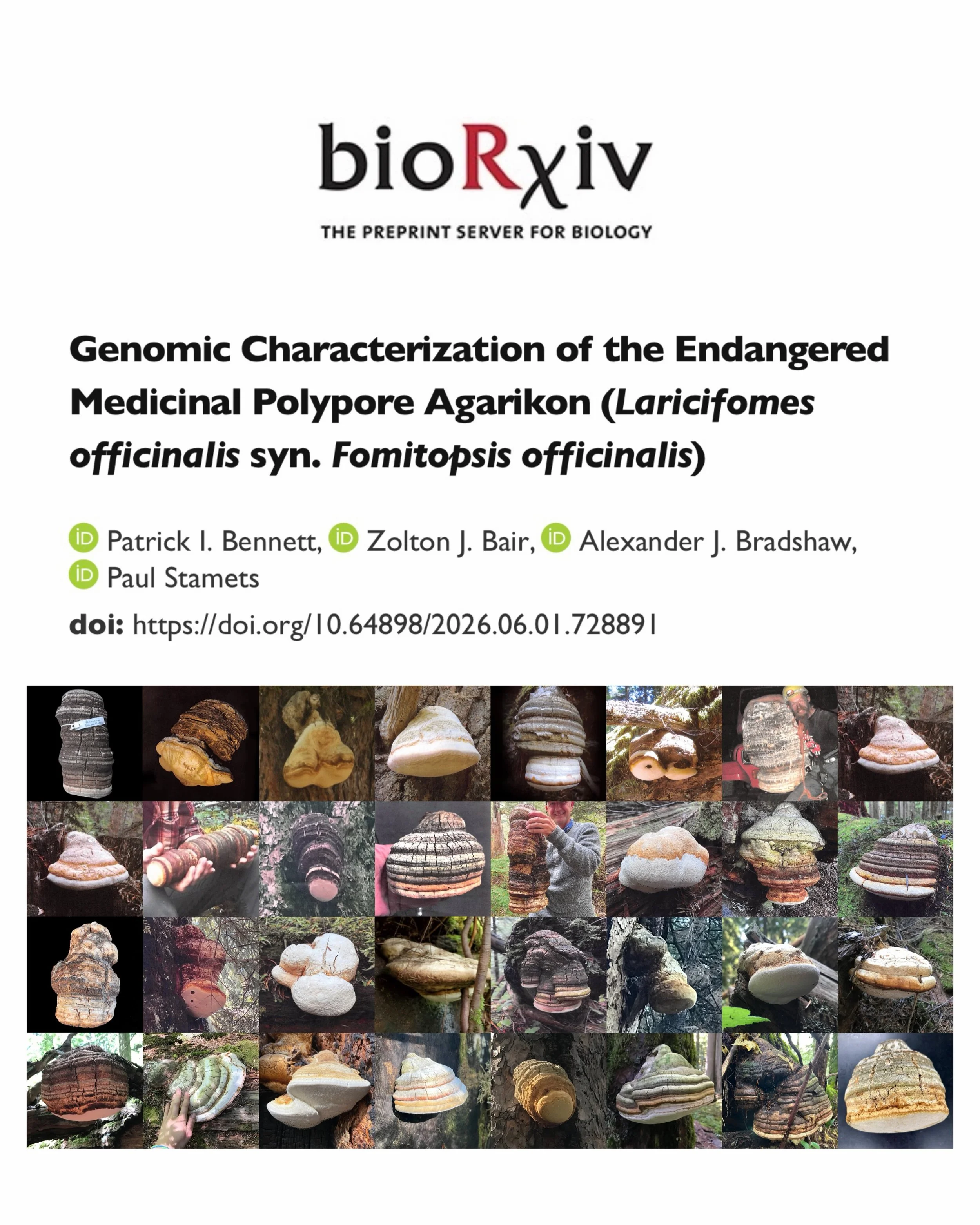
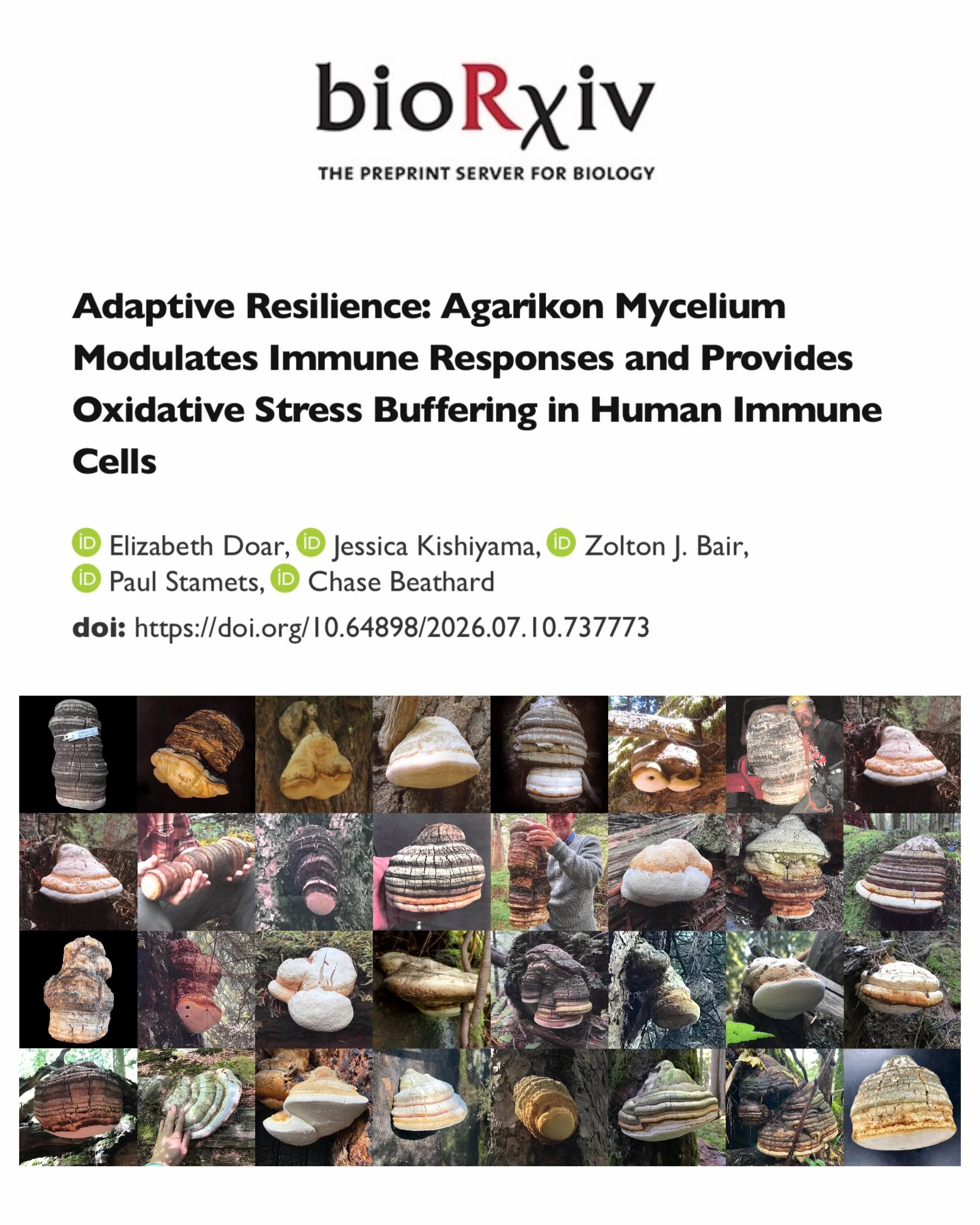
This week marks a major milestone in our decades-long mission to conserve, study, and unlock the mycelial potential of one of the world’s most extraordinary fungi, agarikon.
On Monday, our R&D Team had two manuscripts accepted for publication on the same day, advancing our understanding of agarikon from its genetic blueprint to its functional biology.
The first, accepted by G3: Genes | Genomes | Genetics, presents the first publicly available annotated genome of agarikon (Laricifomes officinalis), revealing 27+ biosynthetic gene clusters associated with diverse classes of bioactive compounds. We are now applying this framework across our library of 120+ agarikon isolates, including 118 with complete genome sequences. https://www.biorxiv.org/content/10.64898/2026.06.01.728891v1
The second, accepted by Frontiers in Immunology, demonstrates context-dependent immune modulation by agarikon mycelium in human immune cells, including immune-calming responses under challenge. This preclinical research also explores potential mechanisms underlying agarikon’s centuries-long association with vitality and longevity, including key oxidative stress defense pathways involving SOD, CAT, and GSH-Px. https://www.biorxiv.org/content/10.64898/2026.07.10.737773v1
This builds on our recent “Calm Under Challenge” study of lion’s mane mycelium, where we found that mycelium can help keep the immune system cool under stress, while highly concentrated β-glucan fruiting body extracts produced a divergent response associated with overstimulation and imbalance.
Together, these publications challenge the idea that fungal biology can be reduced to a single biomarker or isolated compound and underscore the need for a systems-level understanding of mycelium to truly unlock its functional potential. I am deeply proud of our R&D Team and grateful to everyone continuing to advance our understanding of these extraordinary fungi.